
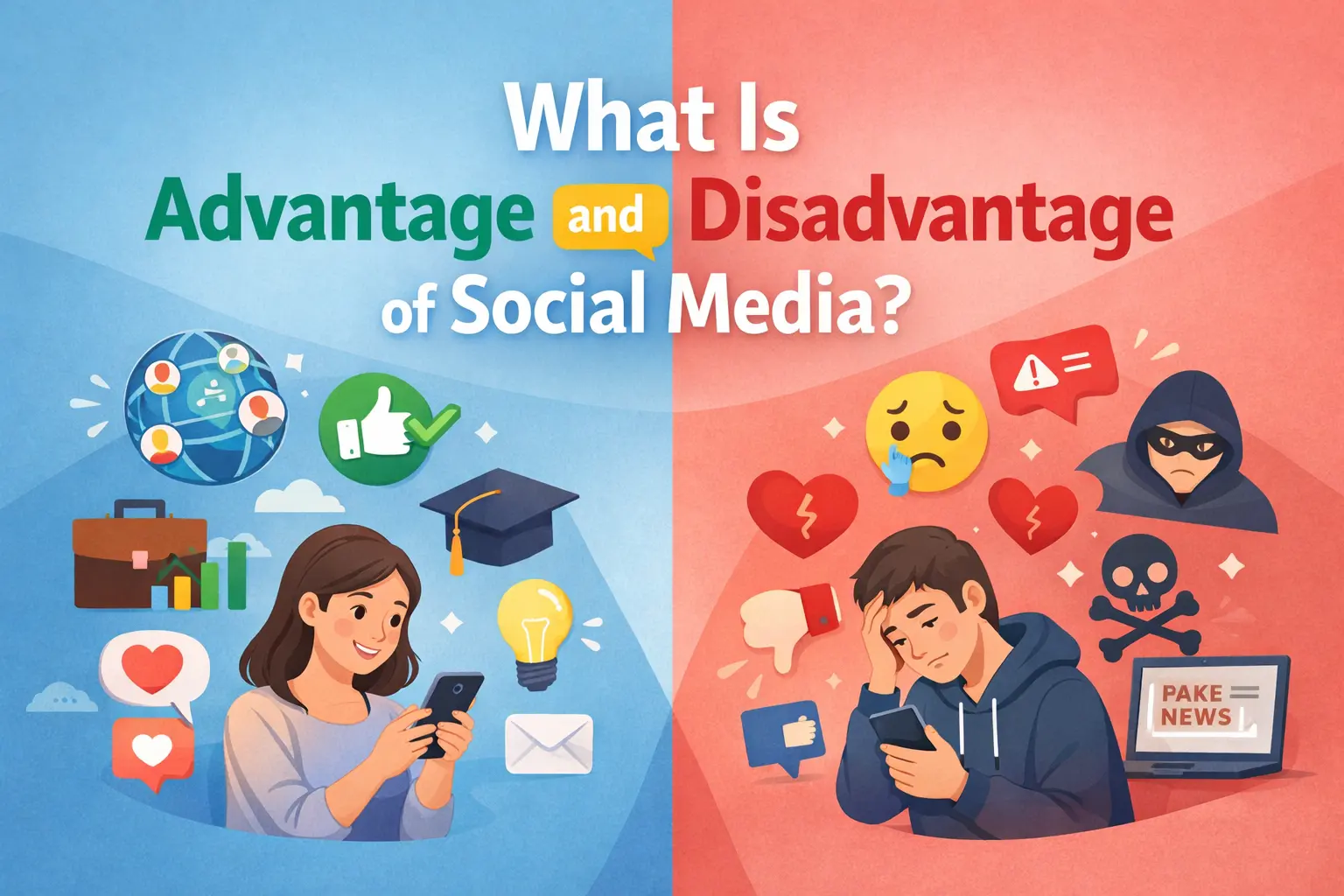
Social media has completely transformed how we communicate, learn, shop, and build relationships. From staying connected with friends to running global businesses, platforms like Facebook, Instagram, X, YouTube, and LinkedIn offer countless opportunities.
But along with benefits come serious concerns.
So, what is advantage and disadvantage of social media? In this in-depth guide, we’ll explore both sides covering its impact on communication, education, business, mental health, and society so you can make informed decisions in today’s digital world.
What Is Social Media?
Social media refers to online platforms and applications that allow users to create, share, and interact with content and connect with others virtually. It includes:
Social networking sites
Video-sharing platforms
Microblogging apps
Professional networking platforms
Messaging apps
Social media has become an essential part of daily life, with billions of active users worldwide.
What Is Advantage of Social Media?
Let’s first understand the advantages of social media in detail.
1. Global Connectivity
One of the biggest advantages of social media is instant global communication.
Connect with anyone, anywhere
Share real-time updates
Maintain long-distance relationships
Build international networks
Earlier, communication across countries required expensive phone calls or emails. Today, it takes seconds.
2. Information & Awareness
Social media spreads information faster than traditional media.
Breaking news updates
Educational content
Awareness campaigns
Social movements
Platforms like YouTube provide free tutorials on almost every topic from cooking to coding.
However, speed also increases the risk of misinformation (which we’ll discuss later).
3. Educational Opportunities
Students benefit significantly from social media:
Online study groups
Educational reels & videos
Free webinars
Career guidance content
Skill development tutorials
Platforms such as LinkedIn help professionals showcase skills and find job opportunities.
4. Business & Marketing Growth
Social media has revolutionized business marketing.
Key Business Advantages:
Low-cost advertising
Direct customer interaction
Brand awareness
Influencer marketing
Real-time customer feedback
Small businesses can now compete with big brands using platforms like Instagram and Facebook.
5. Career & Networking Opportunities
Professionals use social media to:
Build personal brands
Share expertise
Connect with industry leaders
Apply for jobs
For example, LinkedIn allows users to showcase portfolios, certifications, and achievements.
6. Entertainment & Creativity
Social media provides:
Short-form videos
Memes
Live streaming
Creative expression
Digital art & photography exposure
Platforms like YouTube allow creators to earn through monetization programs.
7. Social Awareness & Activism
Many global movements gained attention through social media campaigns.
Advantages include:
Voice for marginalized communities
Fundraising opportunities
Rapid awareness spread
Community support systems
What Is Disadvantage of Social Media?
While social media offers many benefits, it also has serious downsides.
1. Addiction & Time Wastage
Social media platforms are designed to keep users engaged.
Problems include:
Reduced productivity
Sleep disturbances
Reduced focus
Decreased academic performance
Excessive scrolling can lead to hours of wasted time daily.
2. Mental Health Issues
Studies suggest that excessive social media use may cause:
Anxiety
Depression
Low self-esteem
Fear of Missing Out (FOMO)
Constant comparison with others' “perfect” lives can negatively impact confidence.
3. Cyberbullying
Cyberbullying is a serious concern, especially among teenagers.
It includes:
Online harassment
Public shaming
Threats
Rumor spreading
Unlike traditional bullying, online harassment can happen 24/7.
4. Misinformation & Fake News
The rapid spread of unverified content can:
Mislead people
Create panic
Influence public opinion
Damage reputations
Fake news spreads faster than factual news on many platforms.
5. Privacy & Security Risks
Users often share personal information publicly.
Risks include:
Identity theft
Data breaches
Online scams
Phishing attacks
Once information is shared online, it’s difficult to remove permanently.
6. Reduced Face-to-Face Interaction
Excessive social media usage may reduce:
Real-life communication skills
Emotional intelligence
Personal relationship quality
Digital interaction sometimes replaces meaningful real-world conversations.
7. Negative Impact on Academic & Work Performance
Constant notifications interrupt:
Study sessions
Meetings
Focused tasks
Multitasking between work and social media reduces efficiency.
Advantages and Disadvantages of Social Media (Comparison Table)
Advantages | Disadvantages |
|---|---|
Global connectivity | Addiction |
Business growth | Mental health issues |
Educational access | Cyberbullying |
Career networking | Misinformation |
Entertainment | Privacy risks |
Awareness campaigns | Reduced productivity |
What Is Advantage and Disadvantage of Social Media for Students?
Advantages:
Access to online learning
Career guidance
Study collaboration
Skill development
Disadvantages:
Distraction from studies
Sleep problems
Peer pressure
Exposure to harmful content
Students must use social media in a balanced way.
What Is Advantage and Disadvantage of Social Media for Business?
Advantages:
Cost-effective marketing
Targeted advertising
Direct engagement
Brand visibility
Disadvantages:
Negative reviews go viral
Reputation risks
Ad fatigue
Dependence on algorithms
Psychological Impact of Social Media
Social media affects brain reward systems through:
Likes
Shares
Comments
Notifications
This creates dopamine-driven engagement patterns, increasing dependency.
Balanced use is essential for mental well-being.
How to Use Social Media Wisely
To enjoy benefits while avoiding harm:
Set daily time limits
Disable unnecessary notifications
Avoid comparing yourself to others
Verify news before sharing
Use privacy settings properly
Take regular digital detox breaks
Focus on productive content
Social Media in 2026: The Future
Emerging trends include:
AI-generated content
Augmented reality filters
Social commerce
Creator economy expansion
Privacy-focused platforms
The impact of social media will continue evolving with technology.
Conclusion
So, what is advantage and disadvantage of social media?
Advantages:
Global connectivity
Education & skill development
Business growth
Career opportunities
Entertainment & creativity
Disadvantages:
Addiction
Mental health concerns
Cyberbullying
Misinformation
Privacy risks
Social media is neither entirely good nor entirely bad it depends on how we use it.
Balanced usage, digital awareness, and responsible sharing are key to maximizing benefits while minimizing harm.