
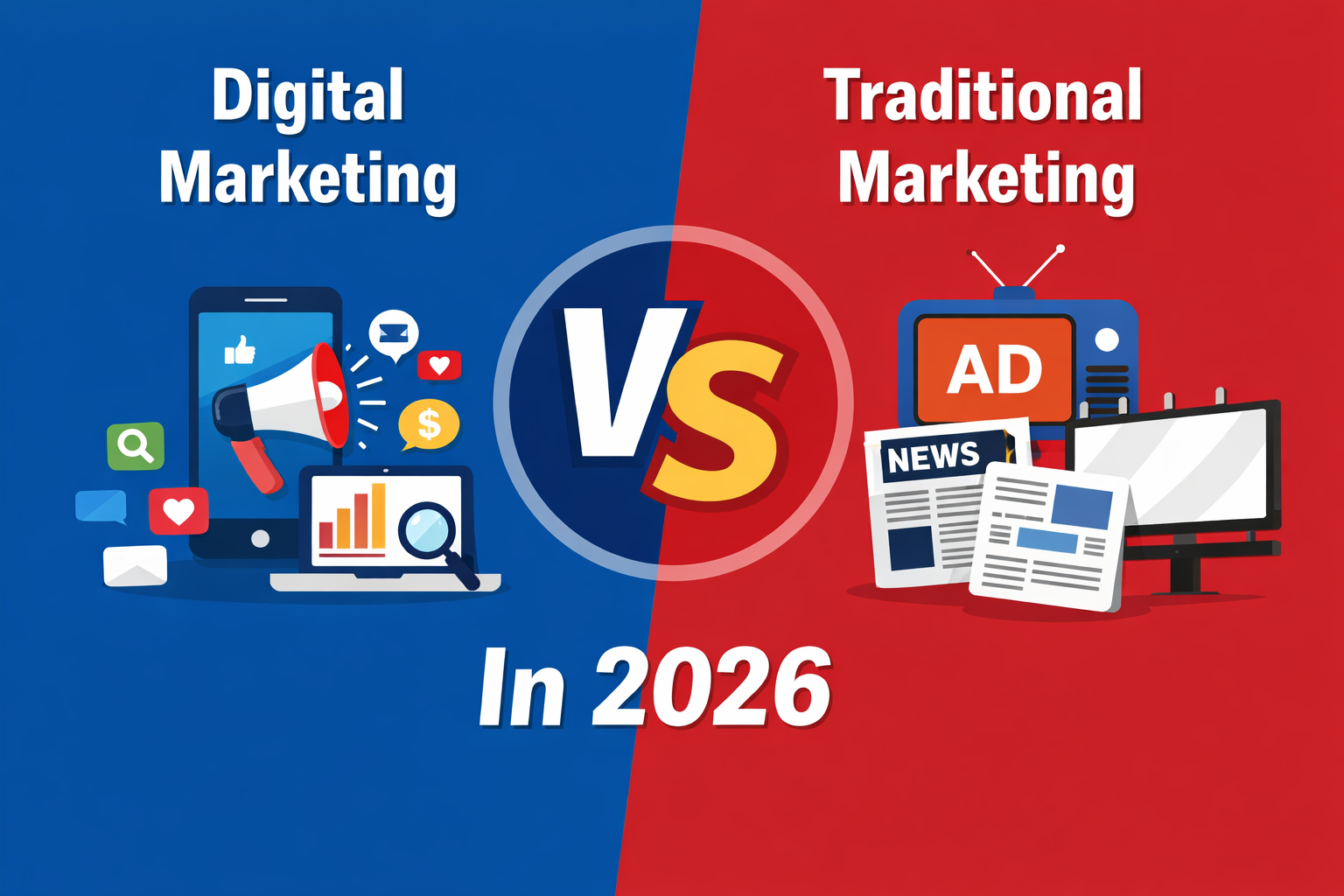
Marketing in 2026 is nothing like it was even a few years ago. As businesses seek ways to attract, engage, and convert audiences, the debate between digital marketing and traditional marketing continues to heat up. While traditional methods still have a role, digital marketing has taken the lead - driven by technology, changing consumer behavior, and evolving expectations. In this comprehensive blog, we’ll explore what each approach entails, their key differences, deep dive comparisons, pros and cons, and how businesses can choose the best strategy for 2026.
What Is Traditional Marketing?
Traditional marketing refers to the conventional methods of advertising that existed long before the internet became ubiquitous. These are offline channels that have been the backbone of brand communication for decades.
Some common traditional marketing channels include:
Television commercials
Radio ads
Print media like newspapers and magazines
Billboards and outdoor advertising
Direct mail and flyers
Telemarketing
Traditional marketing operates on a one-way communication model, where the brand broadcasts a message and the audience passively receives it - with little opportunity for feedback.
Why Traditional Marketing Still Matters
Despite the rise of digital, traditional marketing still holds value:
Strong brand recall through physical presence and mainstream media exposure.
Trust and credibility, especially among older demographics who still consume print, TV, and radio.
Local reach, especially effective for small businesses targeting specific geographic areas.
What Is Digital Marketing?
On the other hand, digital marketing includes all marketing efforts that use digital technologies and online platforms to reach and influence consumers. This approach has expanded rapidly as internet access and smartphone usage continue to grow globally.
The key channels of digital marketing include:
Search Engine Optimization (SEO)
Social media marketing (Instagram, TikTok, LinkedIn, etc.)
Pay-Per-Click (PPC) advertising
Email marketing
Content marketing and blogging
Influencer collaborations
Video marketing and livestreams
Digital marketing creates interactive, personalized, and measurable experiences that help businesses connect with audiences in real time.
2026 Digital Marketing Trends Driving Change
In 2026, digital marketing isn’t just online advertising it’s a dynamic ecosystem shaped by technology and user behavior:
AI-powered personalization and automation, allowing brands to tailor experiences at scale.
Conversational search and immersive SEO, where users ask natural language questions and get direct answers.
Video commerce and shoppable content, turning engagement into direct sales.
Blended channel experiences, where search, social, video, and AI interfaces merge seamlessly.
These innovations show that digital marketing in 2026 is about more than visibility — it’s about creating connected, responsive customer journeys.
Digital Marketing vs Traditional Marketing: Key Differences
To understand how these two approaches stack up, let’s compare them across key marketing dimensions:
1. Audience Targeting
Traditional Marketing reaches a broad audience with minimal precision. For example, a TV ad shows the same message to everyone watching.
Digital Marketing delivers highly targeted messages based on interests, behavior, location, and demographics.
Digital campaigns significantly reduce wasted reach and improve relevance.
2. Engagement & Interaction
Traditional Marketing offers one-way communication. Audiences see or hear the message, but there’s little direct interaction.
Digital Marketing encourages two-way interaction - likes, comments, clicks, shares, and conversations.
Interactive experiences build stronger relationships and deeper brand loyalty.
3. Measurability & Analytics
Traditional Marketing is difficult to measure accurately. Brands often rely on estimations or surveys.
Digital Marketing provides real-time analytics clicks, conversions, engagement metrics, bounce rates, and more.
Data-driven decisions are a core advantage of digital marketing.
4. Cost Efficiency
Traditional Marketing often requires high upfront costs for TV slots, print placements, and billboards.
Digital Marketing offers flexible budgets, where small businesses can compete with big brands at a lower cost.
Cost-effective digital marketing levels the playing field especially for startups and SMBs.
5. Speed & Adaptability
Traditional Marketing lacks flexibility — once a billboard or print ad is published, it can’t be changed quickly.
Digital Marketing allows fast optimization of campaigns based on performance and trends.
Agile campaigns help brands stay relevant in fast-moving markets.
Pros and Cons: Deep Dive
Traditional Marketing Pros
✔️ Builds long-lasting brand awareness.
✔️ Effective for local presence and communities.
✔️ Familiar format for older audiences.
Traditional Marketing Cons
❌ High costs for production and placement.
❌ Limited tracking and optimization.
❌ Slower feedback and adjustment cycle.
Digital Marketing Pros
✔️ Highly targeted and measurable.
✔️ Cost-efficient with flexible budgets.
✔️ Encourages real-time interaction and engagement.
✔️ Global reach and scalability.
✔️ Continuous optimization via analytics.
Digital Marketing Cons
❌ Highly competitive online landscape.
❌ Requires constant updates due to fast-changing trends.
❌ Relies on digital literacy and tech adoption.
Which Marketing Is Best for 2026?
There’s no single answer because it depends on your business goals. But considering the current trends:
Digital Marketing Is Becoming Essential
With AI Strategy, e-commerce, personalized experiences, and real-time engagement becoming core expectations, digital marketing is rapidly becoming the foundation of modern marketing strategies.
Traditional Marketing Still Has Strategic Value
For brand awareness, local reach, and audiences that prefer offline channels, traditional marketing continues to be relevant - especially when combined with digital elements like QR codes or augmented reality tie-ins.
The smartest brands in 2026 are blending both approaches - using digital for precision engagement and traditional for broad visibility.
Integrating Both for Maximum Impact
The most effective marketing isn’t “digital versus traditional” - it’s digital + traditional. For example:
A TV ad that links to a social campaign.
Billboards that drive traffic to a hashtag challenge.
Print ads with QR codes leading to landing pages.
This integration blends brand storytelling with measurable, interactive experiences - the best of both worlds.
Final Thoughts
As we progress through 2026, marketing will continue evolving with technology, AI, and consumer behavior shifts. Digital marketing is rapidly becoming indispensable due to its targeting power, measurability, and adaptability. But traditional marketing still plays a meaningful role for broad awareness and credibility.
The goal isn’t to pick a winner - it’s to create a holistic marketing strategy that maximizes ROI and resonates with your audience across every touchpoint.