
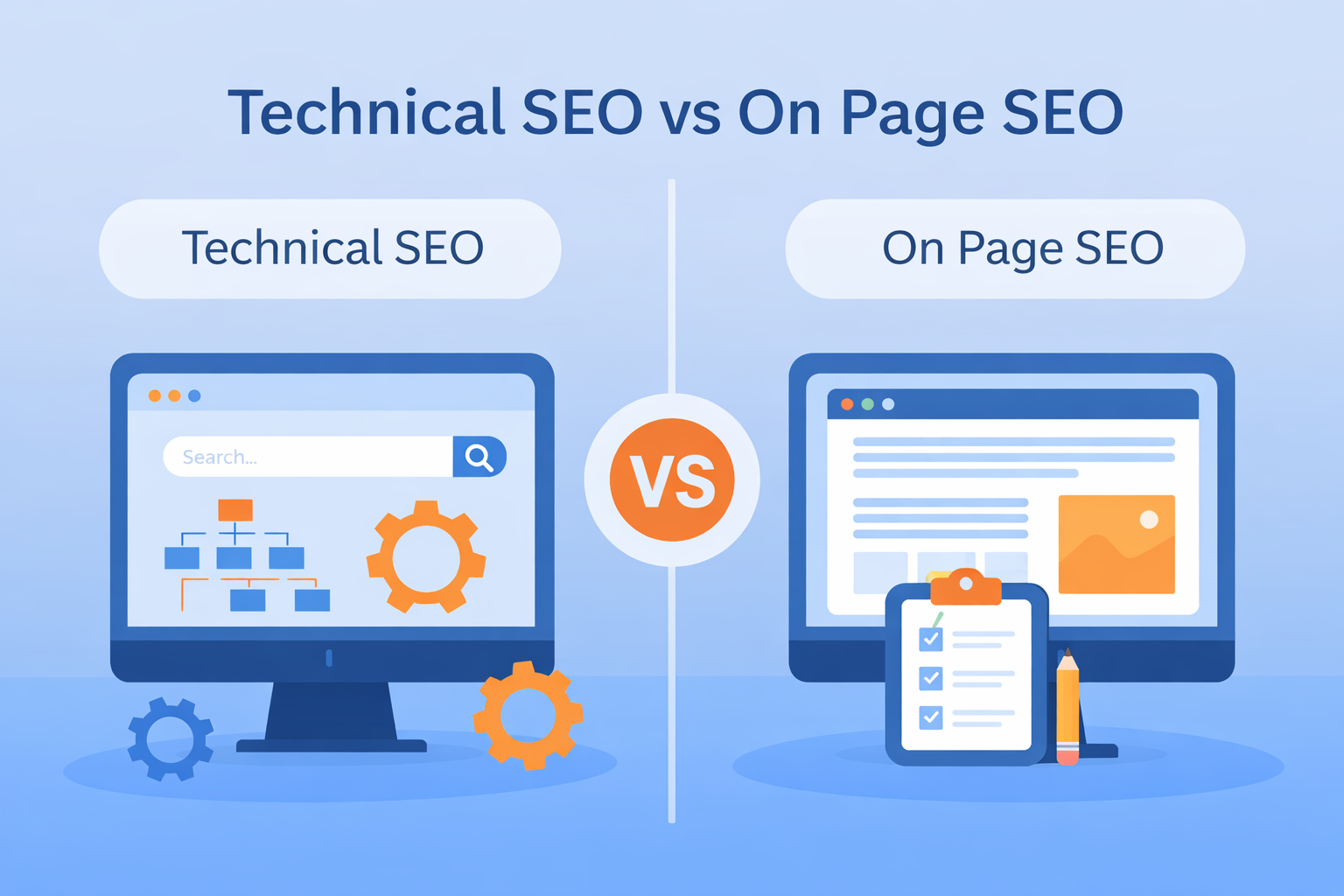
If you’re serious about ranking on Google, you’ve probably heard SEO experts talk about technical SEO and on page SEO. But many website owners and beginners still ask the same question:
Technical SEO vs on page SEO - which one actually helps you rank?
The reality is simple but often misunderstood: you cannot succeed in SEO by choosing only one. Both technical SEO and on-page SEO serve different purposes, and both are essential for sustainable growth.
In this detailed guide, you’ll learn:
The real meaning of technical SEO and on page SEO
How they differ in approach and impact
Where most websites fail
Which one you should prioritize first
How to combine both for maximum rankings in 2026
Let’s start from the basics and build up step by step.
What Is Technical SEO?
Technical SEO focuses on optimizing the foundation and structure of your website so that search engines like Google can crawl, understand, and index your pages without any issues.
Think of technical SEO as the engine of your website. Even if your content is excellent, a weak technical setup can prevent Google from ranking your pages.
Core Objectives of Technical SEO
Make your website accessible to search engines
Improve website performance and speed
Ensure mobile compatibility
Eliminate crawling and indexing errors
Strengthen security and trust
Important Technical SEO Components
1. Crawlability
Search engines use bots to crawl websites. Technical SEO ensures:
Important pages are crawlable
No unnecessary blocking via robots.txt
Logical site architecture
2. Indexing
Indexing decides whether your pages appear in Google results.
XML sitemap submission
No accidental “noindex” tags
Proper canonical URLs
3. Page Speed & Core Web Vitals
Slow websites lose rankings and users.
LCP (Largest Contentful Paint)
INP (Interaction to Next Paint)
CLS (Cumulative Layout Shift)
4. Mobile-Friendliness
Google follows mobile-first indexing, meaning:
Your mobile site matters more than desktop
Responsive design is mandatory
5. HTTPS & Security
Secure websites build trust.
SSL certificates
Safe browsing signals
6. Structured Data (Schema)
Schema helps search engines understand context and improves:
Rich results
CTR from SERPs
Technical SEO makes your website search-engine ready.
What Is On Page SEO?
On page SEO focuses on optimizing individual web pages to rank for specific keywords and satisfy user intent.
Unlike technical SEO, on-page SEO is content-focused and directly visible to users.
Core Objectives of On Page SEO
Improve keyword relevance
Match search intent
Increase engagement
Improve click-through rate
Convert visitors into leads or customers
Important On Page SEO Elements
1. Keyword Optimization
Primary keyword placement
Semantic and related keywords
Natural usage (no stuffing)
2. Title Tags & Meta Descriptions
Clear, compelling, keyword-focused
Improve CTR from search results
3. Headings (H1–H6)
Proper structure
Helps search engines understand content hierarchy
Improves readability
4. Content Quality & Depth
Google now prioritizes:
Helpful content
Real expertise
Clear explanations
Updated information
5. Internal Linking
Improves crawl flow
Passes authority
Keeps users engaged
6. Image Optimization
Descriptive file names
Alt text for accessibility and image search
In short: On page SEO tells Google what your page is about and why it should rank.
Technical SEO vs On Page SEO: The Real Difference
Factor | Technical SEO | On Page SEO |
|---|---|---|
Focus Area | Backend & structure | Content & HTML |
Main Goal | Enable crawling & indexing | Improve relevance |
Visibility | Mostly invisible | Fully visible |
Skill Type | Technical | Creative & strategic |
Timing | Usually first | Ongoing |
Impact | Enables rankings | Drives rankings |
Technical SEO vs On Page SEO: Which One Should You Do First?
This is where most websites make mistakes.
Correct SEO Priority Order
Step 1: Technical SEO
If Google can’t crawl or index your site properly, nothing else matters.
Step 2: On Page SEO
Once your site is technically sound, on-page optimization helps you rank and convert.
Real-Life Example
A fast, crawlable site with poor content → Won’t rank
Great content on a slow, broken site → Won’t rank
Strong technical + strong content → Ranks consistently
Conclusion: Technical SEO builds the road; on-page SEO drives traffic on it.
How Technical SEO Directly Impacts On Page SEO Performance
Technical SEO silently boosts your on-page efforts in many ways:
Faster pages reduce bounce rate
Mobile-friendly layouts improve engagement
Clean URL structure improves readability
Proper indexing ensures optimized pages appear in SERPs
Schema increases visibility and CTR
Without technical SEO, on-page SEO often fails to deliver results.
How On Page SEO Strengthens Technical SEO Results
On-page SEO gives direction and relevance to your technical setup:
Keyword-optimized headings help crawlers understand content
Internal links guide bots to important pages
High-quality content improves dwell time
Clear structure reduces crawl waste
Both systems support each other.
Technical SEO vs On Page SEO for Beginners
If you’re new to SEO, follow this safe and effective roadmap:
Phase 1: Basic Technical SEO
Install SSL
Improve page speed
Fix indexing issues
Mobile optimization
Submit sitemap
Phase 2: On Page SEO Execution
Keyword research
Content creation
Title & heading optimization
Internal linking
Image SEO
This approach delivers stable and long-term growth.
Technical SEO vs On Page SEO in 2026: What’s New?
Technical SEO Evolution
Core Web Vitals are now ranking signals
JavaScript SEO is critical
AI-driven crawling improvements
Structured data usage increasing
On Page SEO Evolution
Search intent over keywords
Topical authority matters more
EEAT (Experience, Expertise, Authority, Trust)
Helpful Content System
SEO success in 2026 depends on balance, not shortcuts.
Common Mistakes That Hurt Rankings
❌ Ignoring technical issues
❌ Keyword stuffing
❌ Thin content
❌ Poor internal linking
❌ Slow mobile performance
Avoiding these mistakes alone can significantly improve SEO results.
Technical SEO vs On Page SEO: Final Verdict
✔ Technical SEO ensures your site is crawlable and indexable
✔ On page SEO ensures your content is relevant and valuable
You don’t choose one - you master both.
If you want consistent rankings, traffic growth, and conversions, combining technical SEO + on-page SEO is non-negotiable.
Want to Learn Technical SEO & On Page SEO Practically?
If you want to implement everything correctly, avoid costly mistakes, and build job-ready SEO skills, professional training with real projects and live tools makes a huge difference.
Learn SEO from LearnToDigital the way search engines reward it - with strategy, structure, and skills.
Reference:
https://developers.google.com/search/docs/fundamentals/seo-starter-guide